

OUR MISSION
Cultural heritage has been protected by particular groups of people as a source of the identity they inherited from their ancestors. It is also an irreplaceable testimony to the history of mankind that should be referred to in building man’s future. On the other hand, it is also a fact that much cultural heritage is facing the risk of degradation, destruction, and disappearance without being given sufficient protection for different reasons. Cooperation in the protection of cultural heritage is becoming increasingly important as a means of facilitating cultural exchange and mutual understanding among various countries.
The Japan Center for International Cooperation in Conservation, the national center for promoting international cooperation in terms of conservation and restoration as well as research of cultural heritage, continues to conduct cooperation projects in various parts of the world actively. The Center’s activities range over diverse areas related to the protection of cultural heritage, such as the collection, study, and dissemination of international information, the implementation of cooperation projects, and capacity development in conservation.
The Center consists of three sections, namely Resource and Systems Research Section, Conservation Design Section, and Conservation Practice Section. It also coordinates activities with the International Cooperation Section of the Nara National Research Institute for Cultural Properties, connecting the two research institutes for cultural properties based in Tokyo and Nara, for effective implementation of the Institutes’ internationally-related activities.
News & Column
- Closing International Course on Conservation of Japanese Paper 2026
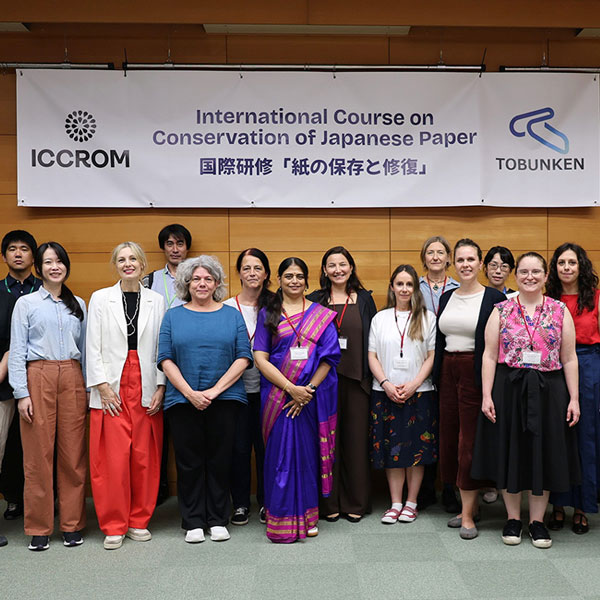 The International Course on the Conservation of Japanese Paper was concluded on September 11. In the course, 10 participants from around the world learned about conservation using Japanese paper through lectures, practical training, and a study tour. In the practical training, participants learned traditional Japanese mounting and restoration techniques through the making of a kansu… Read more: Closing International Course on Conservation of Japanese Paper 2026
 - [AI Transcript] International Cooperation in Cultural Heritage Connecting the Local and the World, as Witnessed by a Graduate Student in Germany
 Sorry, this column does not yet include English text. → Google Translate TOP: Various types of brushes used in restoration work with washi paper (photo by the author)
 - Heritage Dialogues #2: Industrial Heritage in Southeast Asia: Case studies in Thailand
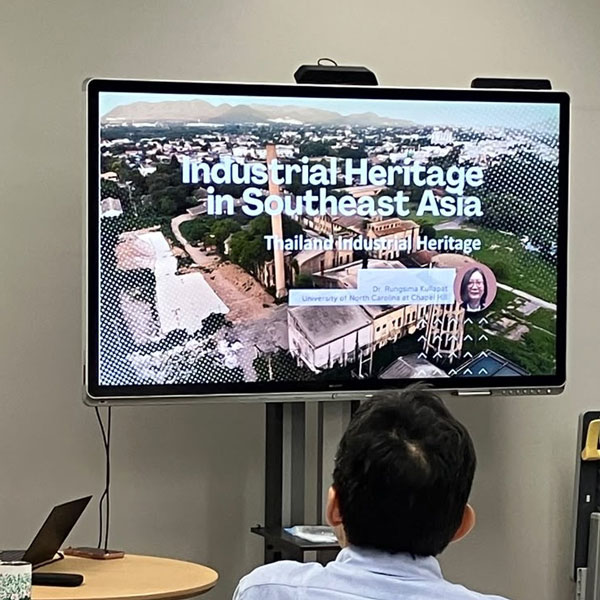 On 18 September, we held the second session of the “Heritage Dialogues”, which is planned as a casual communication platform to share knowledge, ideas and experiences relating to cultural heritage. We welcomed Dr. Rungsima Kullapat, a researcher from the University of North Carolina at Chapel Hill, USA, as our speaker, who talked about industrial heritage… Read more: Heritage Dialogues #2: Industrial Heritage in Southeast Asia: Case studies in Thailand
 - Heritage Dialogue #1: A Kathmandu-Tokyo Online Exchange Meeting on the Conservation of Historic Houses
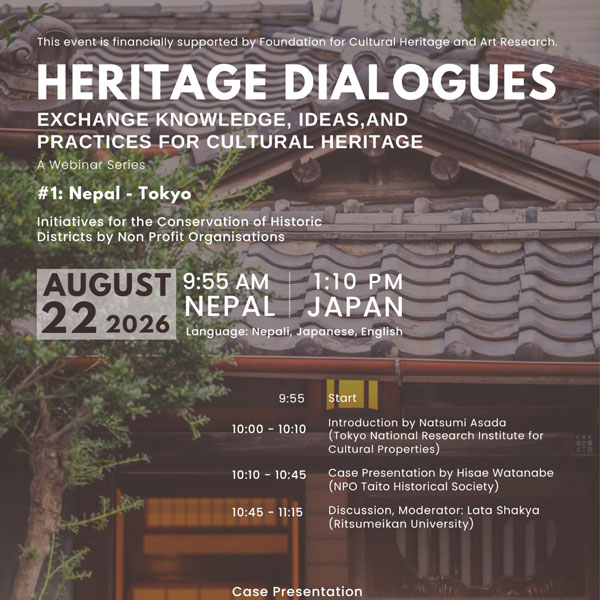 On 22 August, we held the first session of the “Heritage Dialogue”, which is planned as a casual communication platform to share knowledge, ideas and experiences relating to cultural heritage. The topic of the first session was the conservation of historic houses, welcoming Ms. Hisae Watanabe, a board member of non-profit organization (NPO) Taito Cultural… Read more: Heritage Dialogue #1: A Kathmandu-Tokyo Online Exchange Meeting on the Conservation of Historic Houses
 - International Course on Conservation of Japanese Paper 2026 Begins in Tokyo
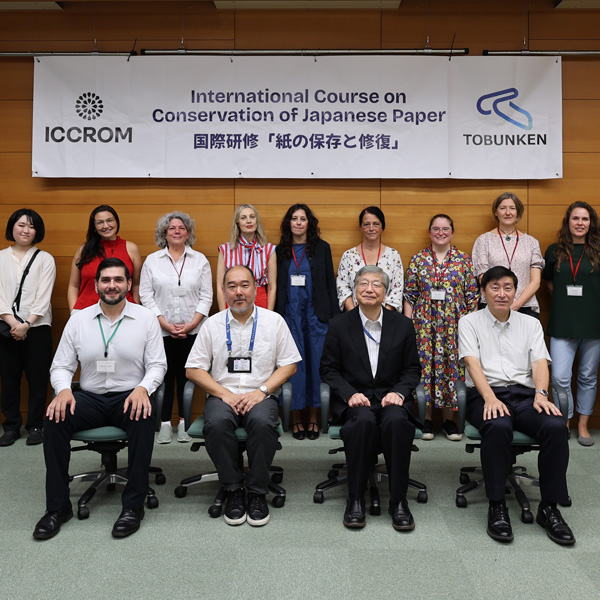 The International Course on Conservation of Japanese Paper co-hosted by the Tokyo National Research Institute for Cultural Properties (TOBUNKEN) and the International Centre for the Study of the Preservation and Restoration of Cultural Property (ICCROM), commenced on August 24, 2026. This course has a long history since 1992. This year's course attracted 131 applicants from… Read more: International Course on Conservation of Japanese Paper 2026 Begins in Tokyo