クリックすると高精細画像が閲覧できます
近赤外線画像
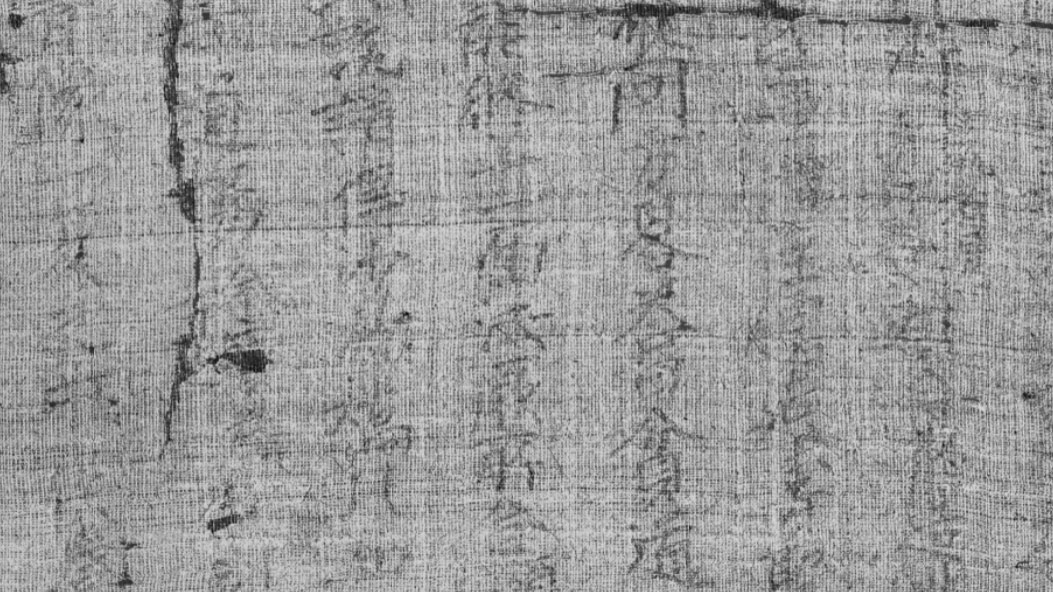
カメラのレンズに近赤外線のみ通過するフィルターを付けると、近赤外線を多く吸収した部分が黒く、反射した部分が白く写ります。墨や鉛筆に含まれる炭素は近赤外線を多く吸収することから、これらの素材を使った下描きの存在や墨書を調べる目的で、文化財の近赤外線撮影が行われてきました。
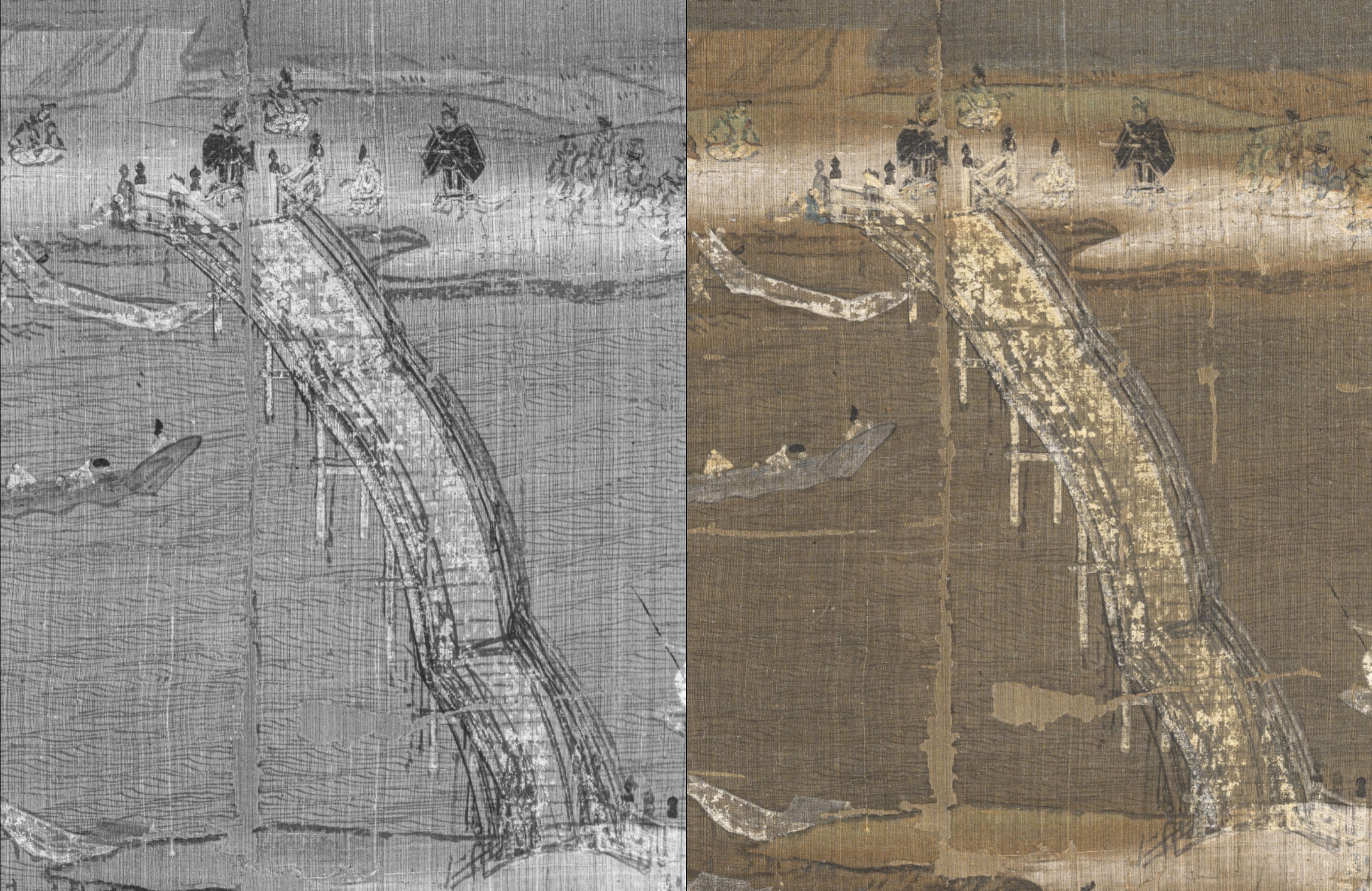
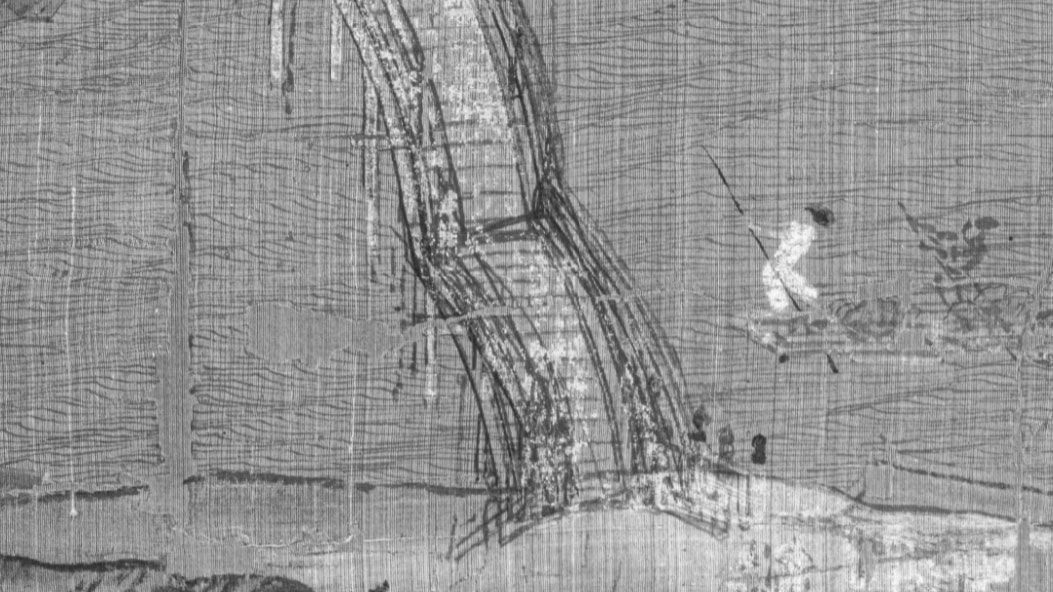
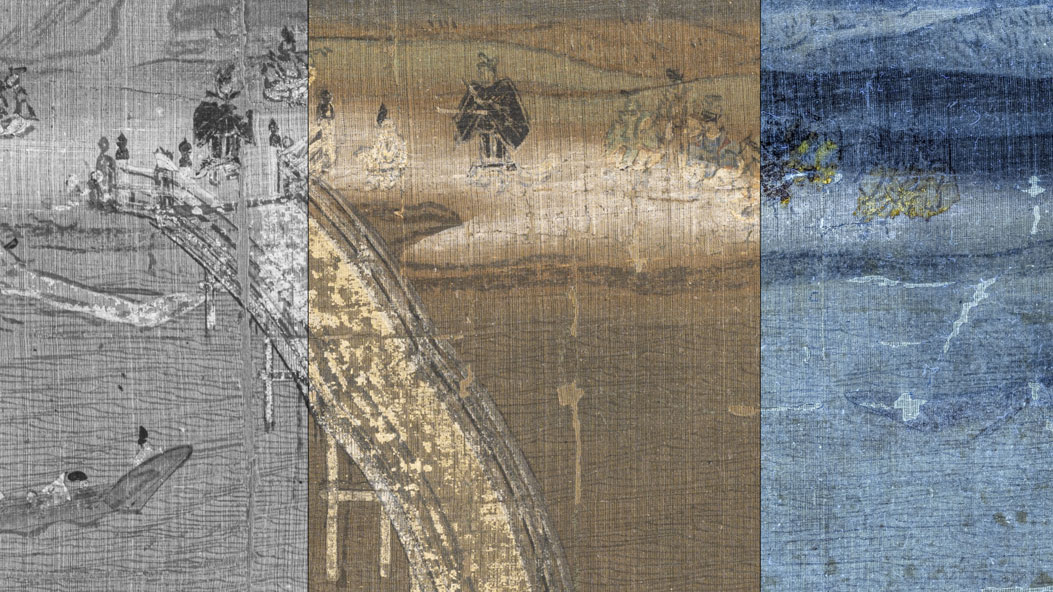
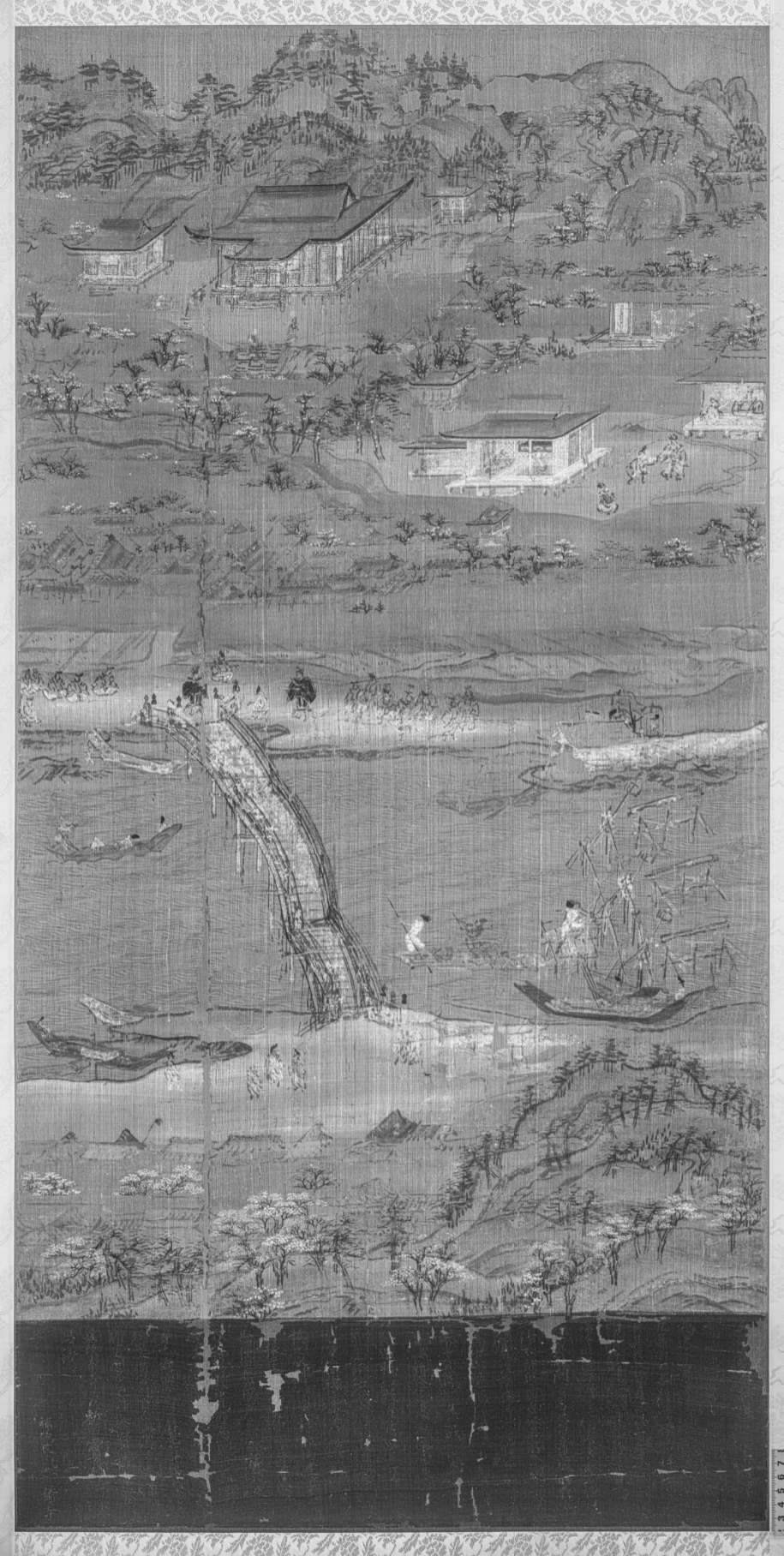
この画像は、正面から照明を当てて画面から反射した近赤外線の反応を記録したものです。肉眼でも識別できますが、川面には波の線描がリズミカルに引き重ねられて川の流れが立体的に表されていることや、橋や人物、建物の形や位置が修正されていることがより鮮明に確認できます。
Near-Infrared Image
When a filter that allows only near-infrared light to pass is attached to a camera lens, areas that strongly absorb near-infrared radiation appear black, while areas that reflect it appear white in the resulting image. Because carbon contained in materials such as ink and graphite absorbs a large amount of near-infrared radiation, near-infrared photography has been used in the research of cultural properties to investigate the presence of underdrawings and inscriptions executed in ink or pencil.
This image records the response of near-infrared light reflected from the surface of the painting when illuminated from the front. Although some features can be faintly distinguished with the naked eye, this image allows us to observe more clearly the fact that rhythmic linear strokes have been layered on the river surface to create a three-dimensional expression of the flowing water, and that the shapes and positions of the bridge, figures, and buildings were revised during the painting process.