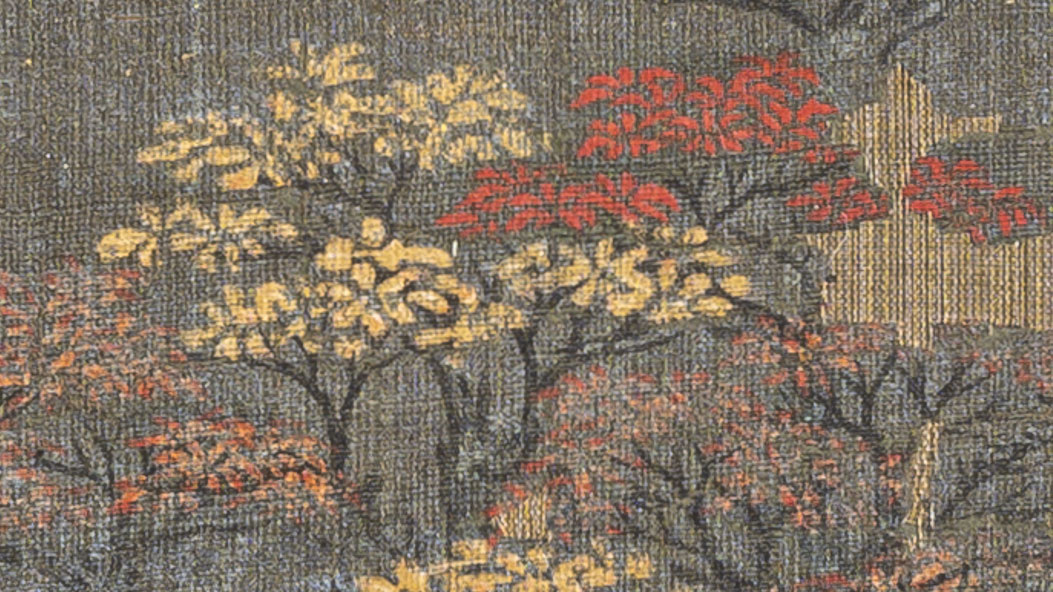
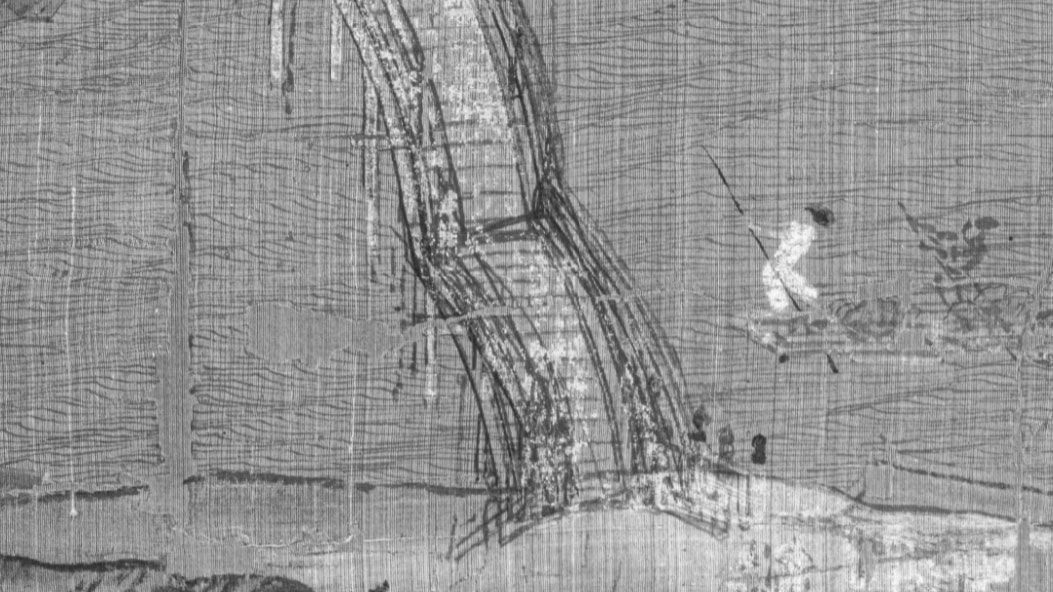
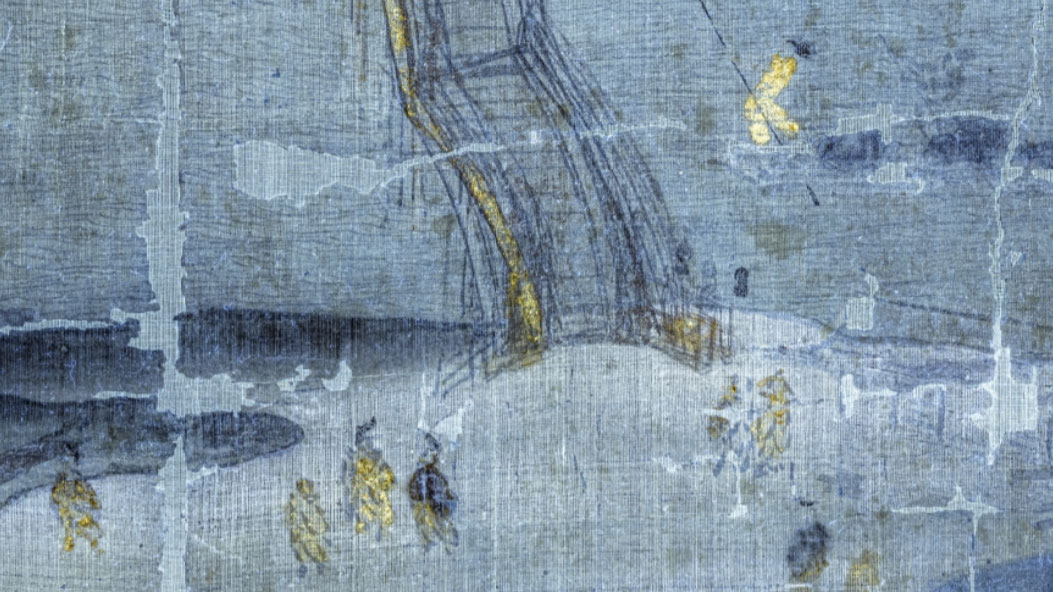
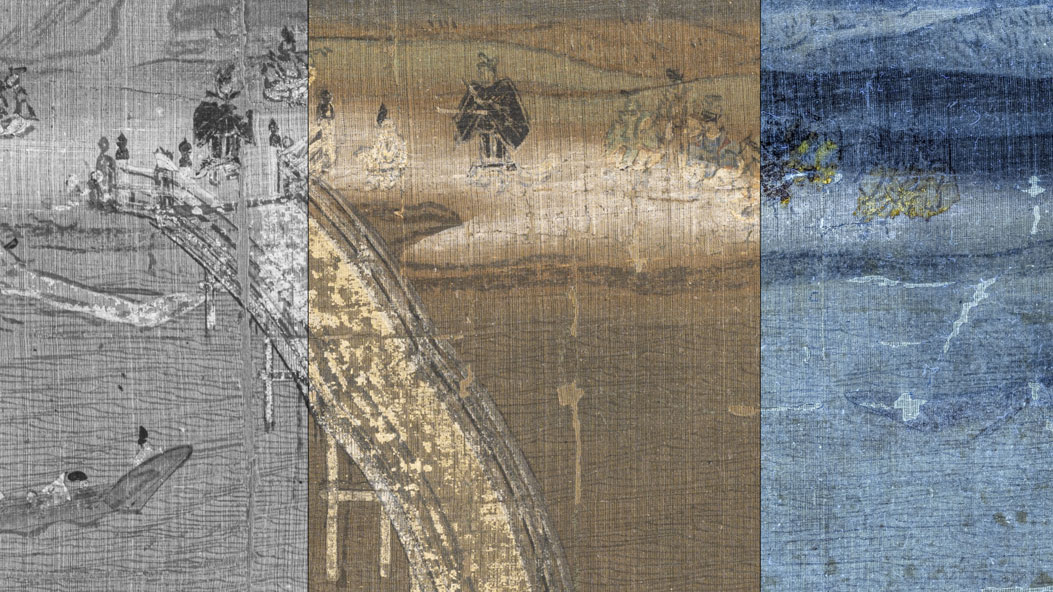
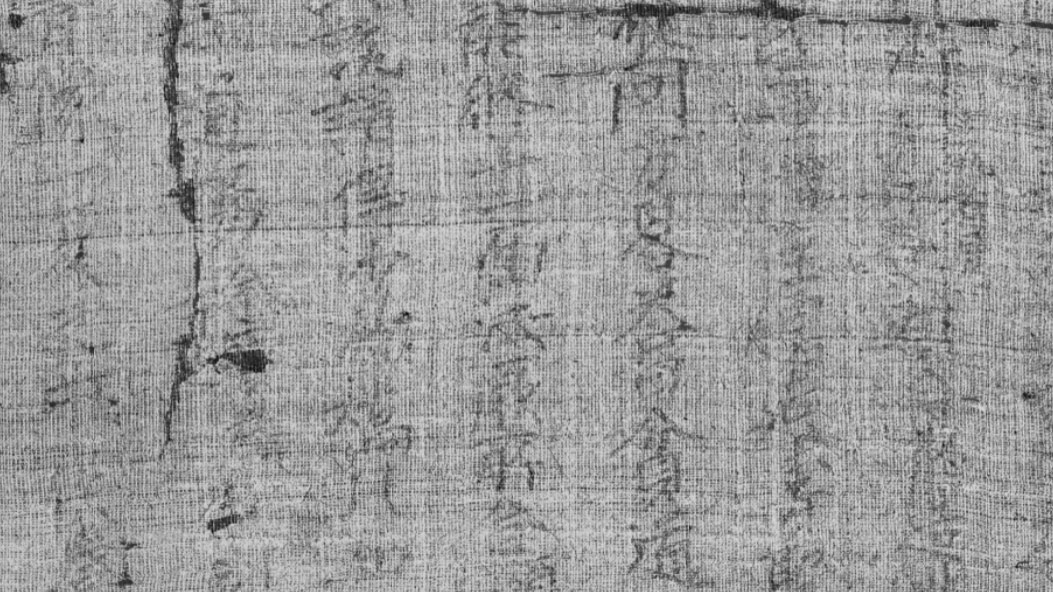
東京文化財研究所は令和6年(2024)に和泉市久保惣記念美術館と共同研究の覚書を締結し、同館所蔵作品の調査研究を行っています。「山崎架橋図」は現在の京都府乙訓郡大山崎町と京都府八幡市の間、桂川・宇治川・木津川が合流して淀川になる地点で、宝積寺の本尊・十一面観音が老翁に化身して山崎橋を架けたという平安時代前期の天安2年(858)(縁起文による)の奇談を描いています。画面には橋の工事にまつわる劇的な霊験譚と人々の風俗表現が、天王山と男山の風景や宝積寺の景観描写の中に溶け込むように表されています。この作品は美術史だけでなく、歴史学や国文学の研究においても注目されてきました。現在では経年変化により、微細な表現や画面下方の縁起文は見づらくなっていますが、画面に存在する情報を最大限引き出すことを目指して2回にわたり光学調査を実施してきました。
この共同研究の成果が広く活用され、作品への理解が深まることを目指してまいります。
In 2024, the Tokyo National Research Institute for Cultural Properties (TOBUNKEN) signed a Memorandum of Understanding for collaborative research with the Kuboso Memorial Museum of Art, Izumi, and is therefore conducting research on artworks in the museum’s collection. Yamazaki Bridge (Yamazaki Kakyō zu) depicts a curious legend set at the point where the Katsura, Uji, and Kizu Rivers merge to form the Yodo River, between present-day Ōyamazaki Town in Otokuni District, Kyoto Prefecture, and Yawata City in Kyoto Prefecture. According to the engi text, in Ten’an 2 (858) of early Heian period, the principal deity of Hōshaku-ji temple, the Eleven-headed Kannon, transformed into an old man and built the Yamazaki Bridge.
Within the painting, a dramatic miracle tale associated with the bridge’s construction and scenes depicting the customs and activities of the local people are seamlessly integrated into the landscapes of Mt. Tennō and Mt. Otoko, as well as into the precinct of Hōshaku-ji temple. This work has attracted attention not only in the field of art history but also in the fields of Japanese history and literature.
Due to the effects of aging, however, certain elements of the painting—particularly the minute pictorial details and the engi text inscribed in the lower section of the composition—have become difficult to discern. In order to recover as much visual and textual information as possible, optical investigation of the work have been conducted on two occasions.
It is hoped that the results of this collaborative research will be widely utilized and will contribute to a deeper understanding of the work.
このデジタルコンテンツは、和泉市久保惣記念美術館と東京文化財研究所の共同研究の成果の一部です。
執筆・構成:江村知子・月村紀乃(東京文化財研究所)、河田昌之・橋詰文之・後藤健一郎(和泉市久保惣記念美術館)
写真撮影・デジタル化技術の開発・画像形成:城野誠治(東京文化財研究所)
デジタルコンテンツ制作:薬師寺君子(東京文化財研究所)
This digital content is part of the results of a collaborative research project between the Kuboso Memorial Museum of Arts, Izumi and TOBUNKEN.
Writing and organization: EMURA Tomoko, TSUKIMURA Kino (TOBUNKEN), KAWADA Masayuki, HASHIZUME Fumiyuki and GOTO Kenichiro (The Kuboso Memorial Museum of Arts, Izumi)
Photography, development of digitalization technology, and image production: SHIRONO Seiji (TOBUNKEN)
Digital content production: YAKUSHIJI Kimiko (TOBUNKEN)
