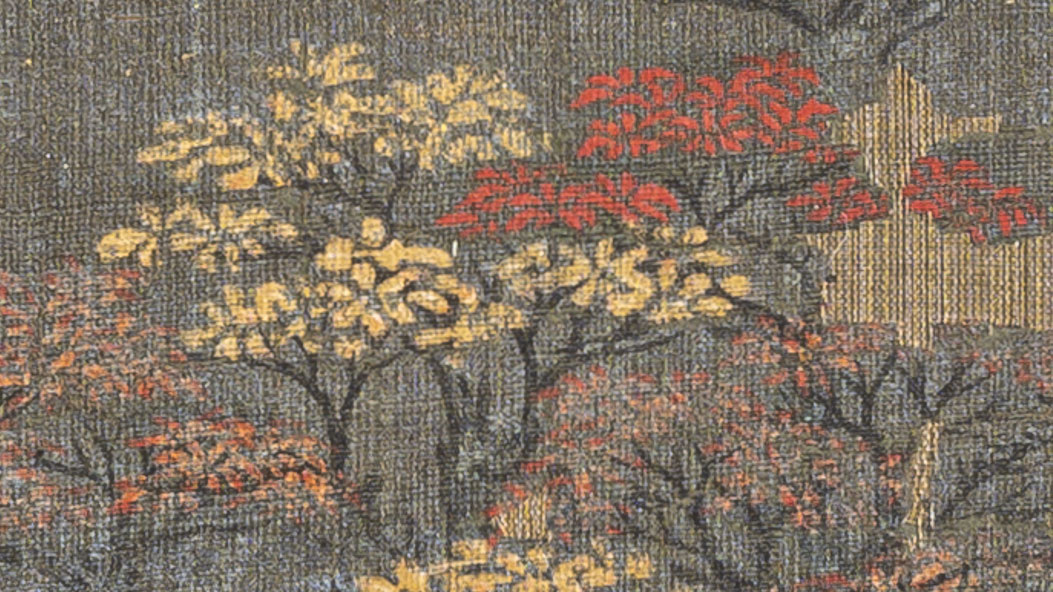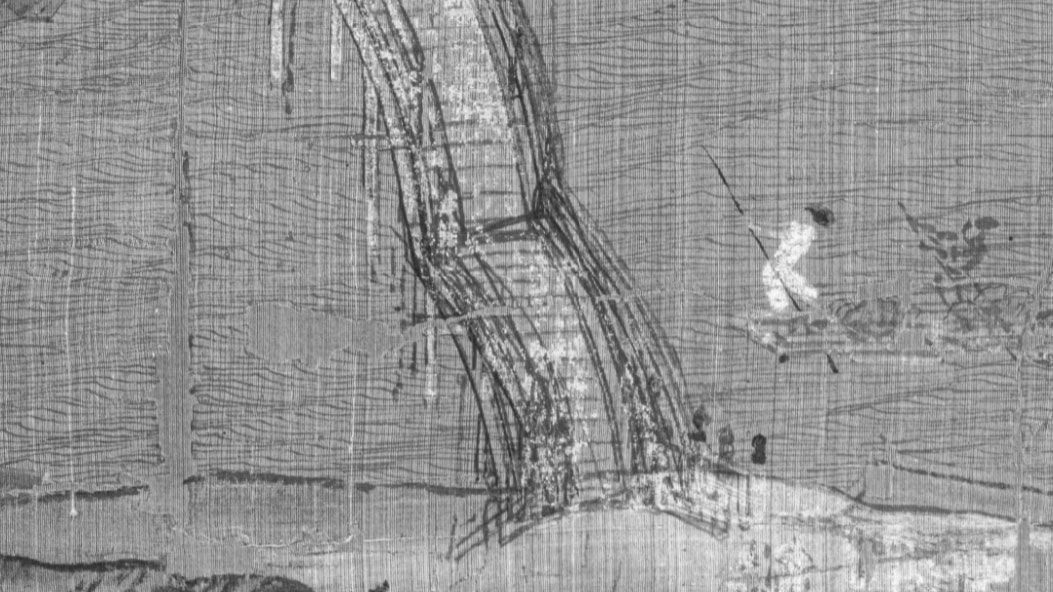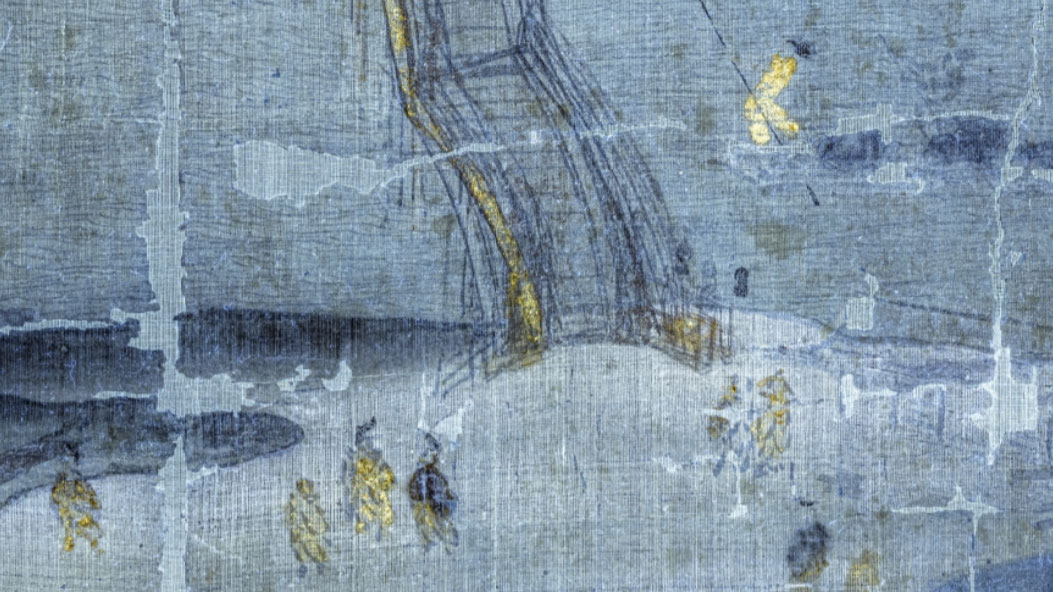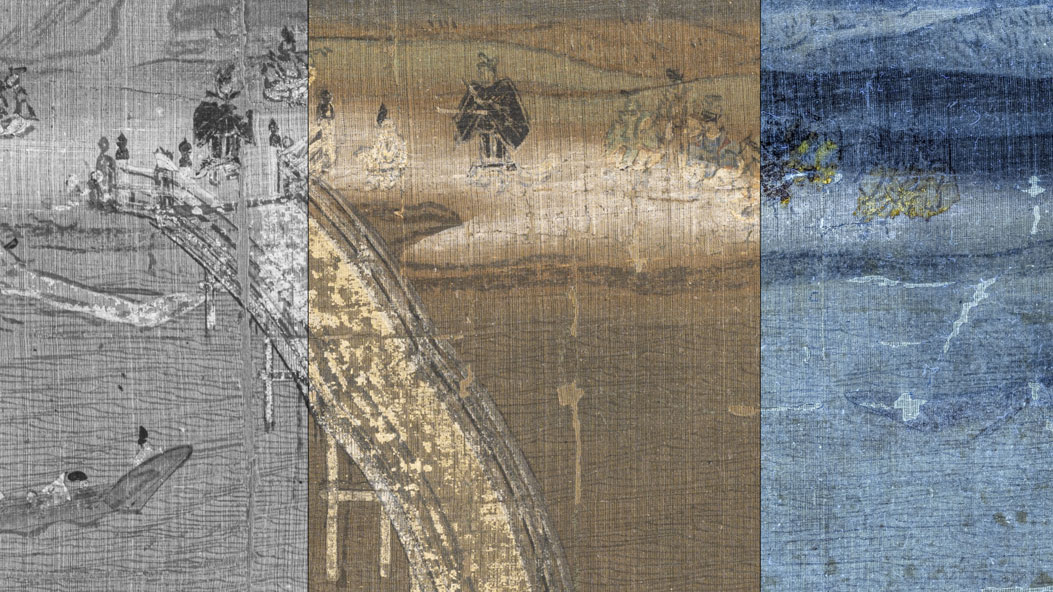
クリックすると高精細画像が閲覧できます
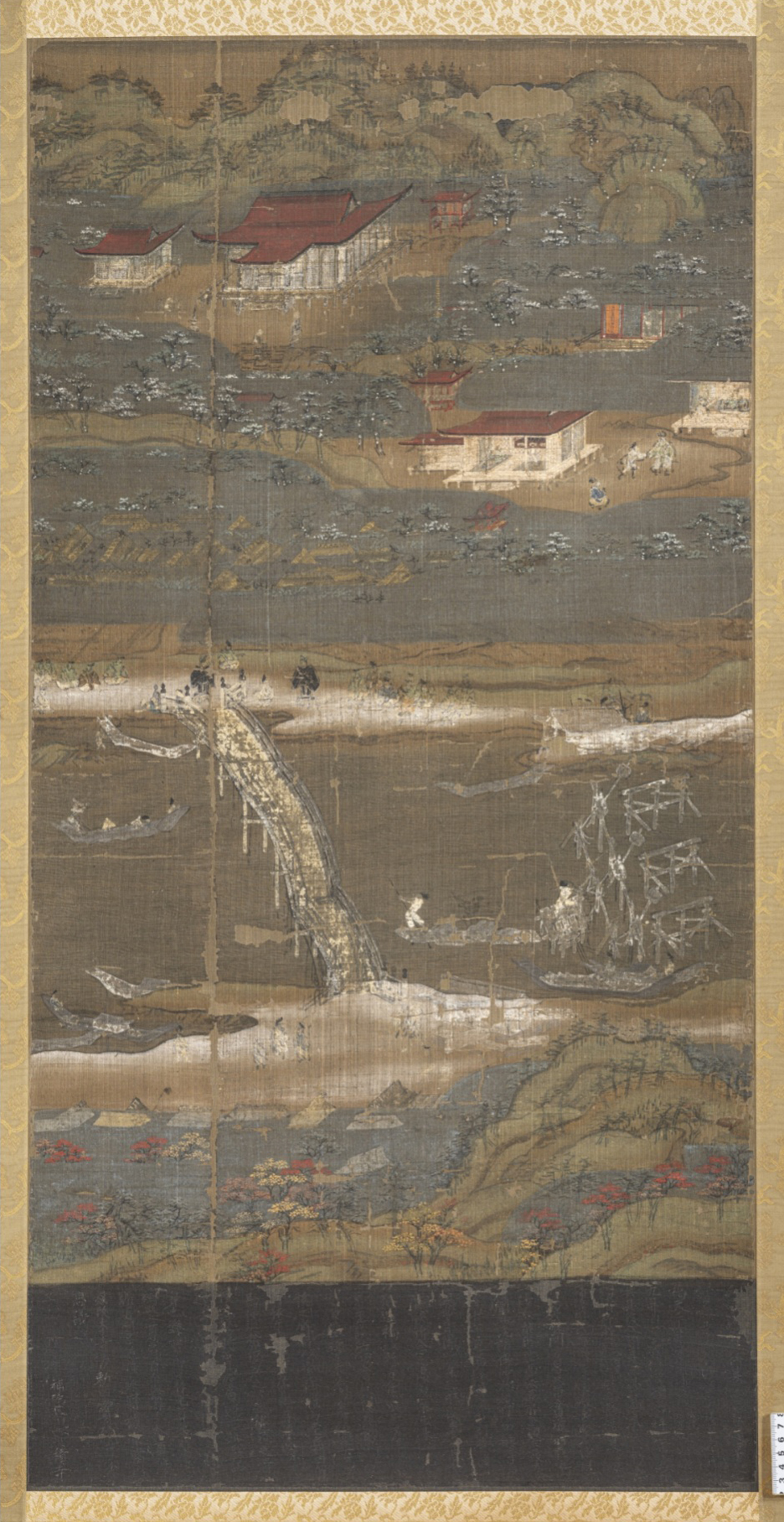
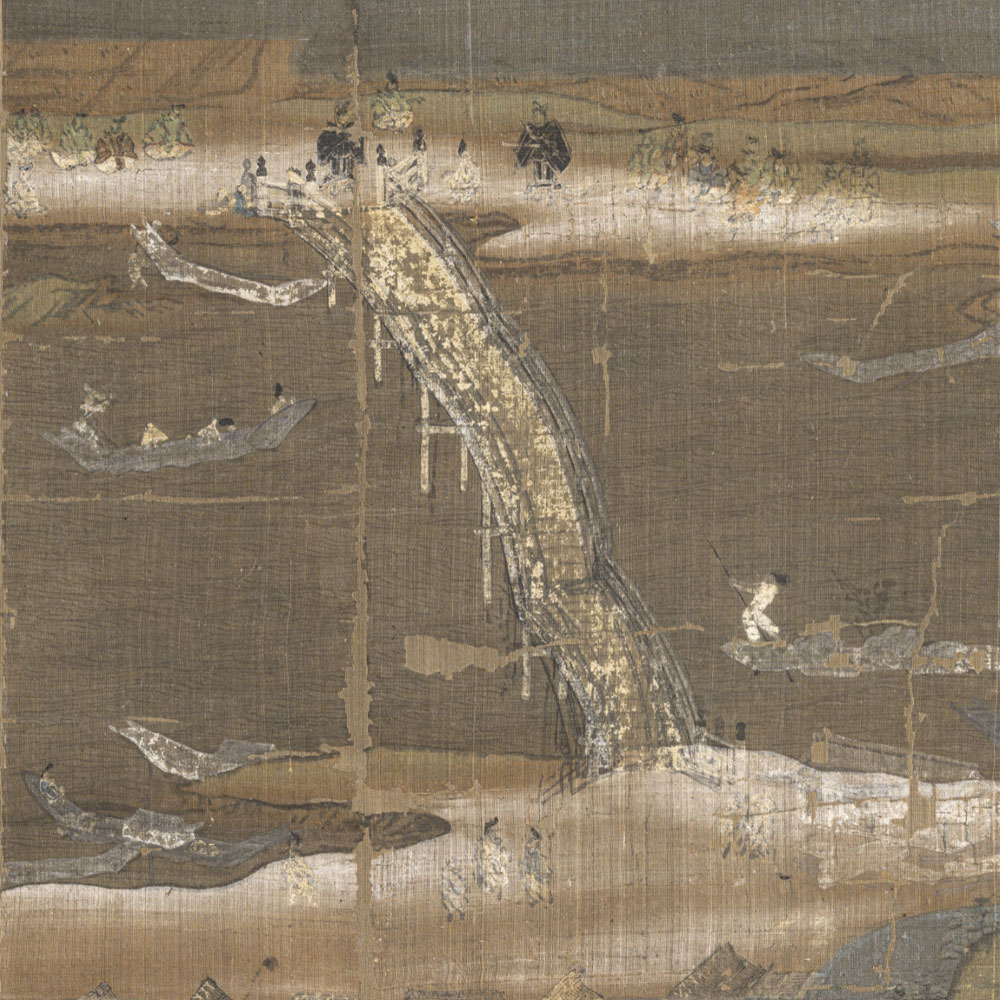
山崎架橋図 絹本著色 1幅 鎌倉時代 108.6×55.0㎝ 重要文化財 和泉市久保惣記念美術館蔵
作品解説
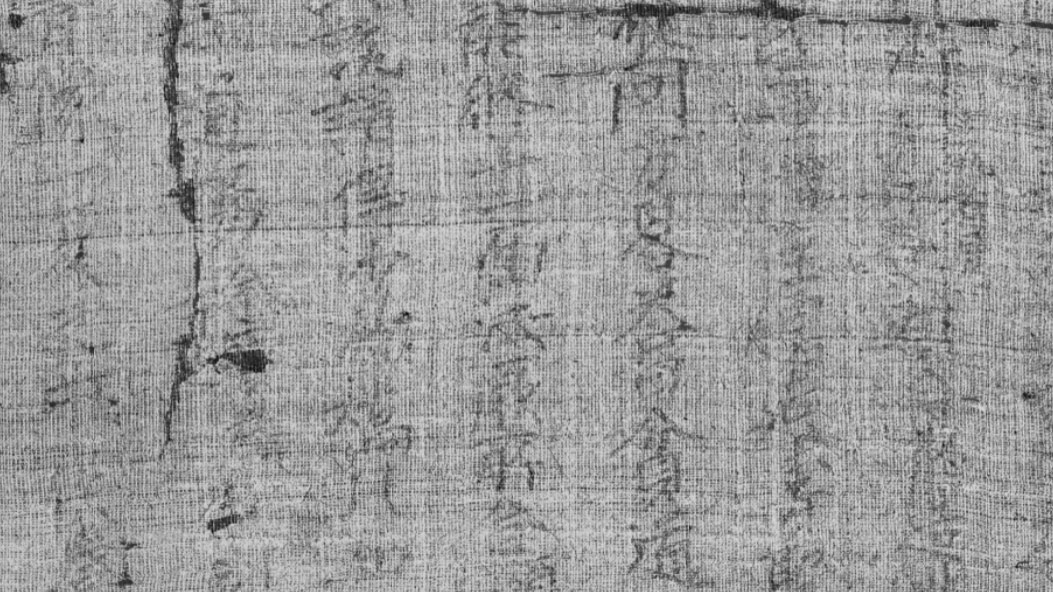
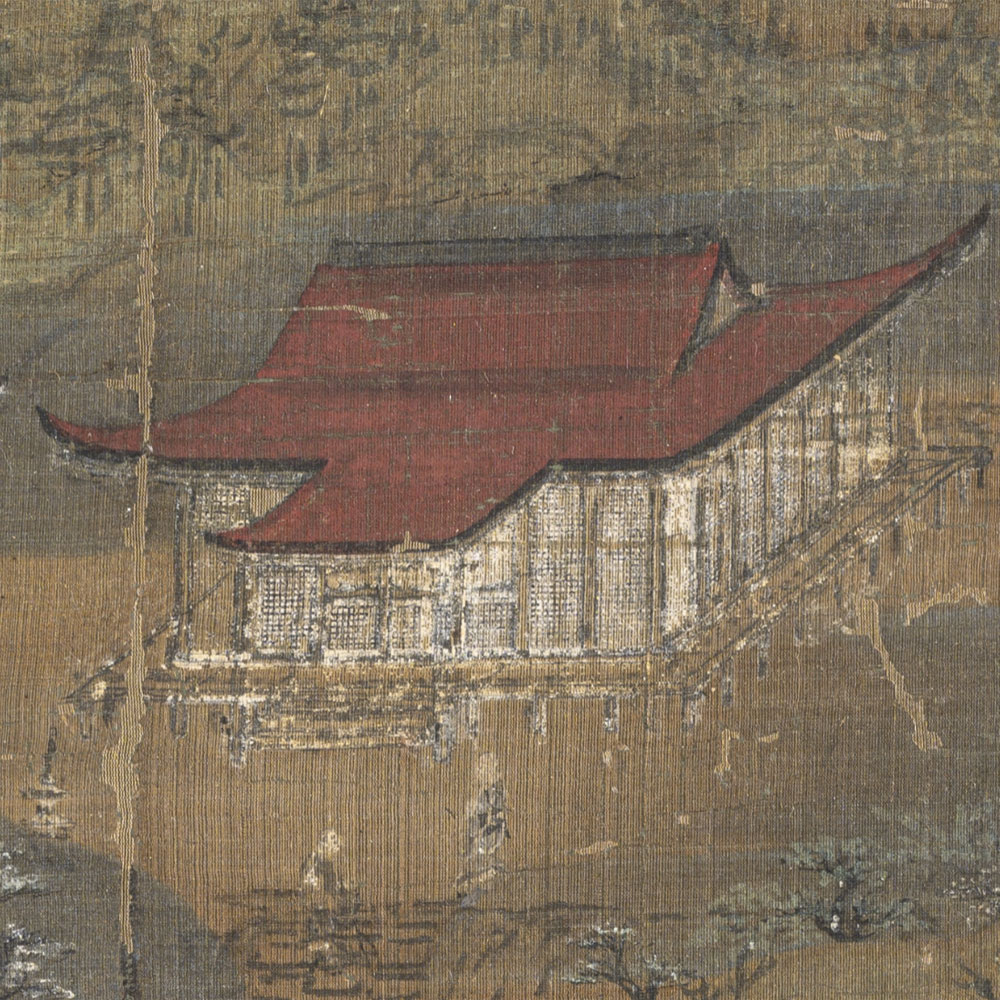
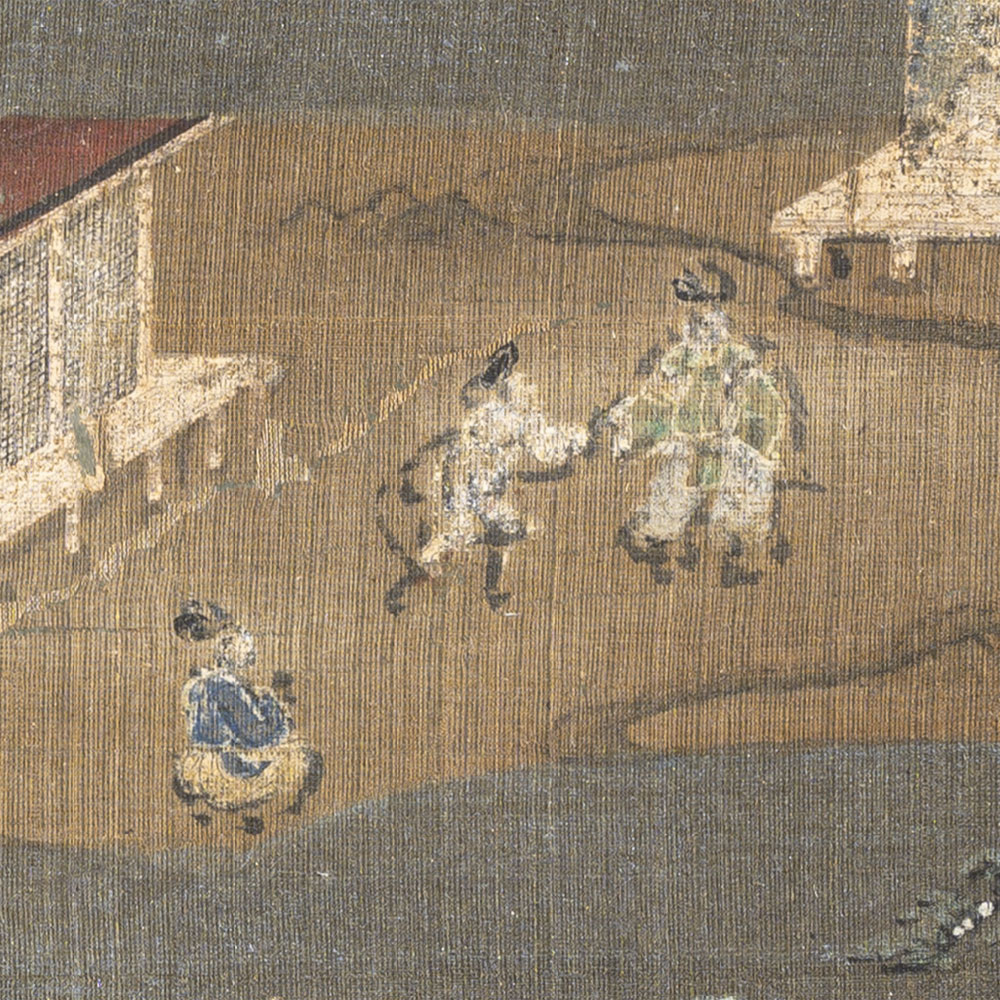
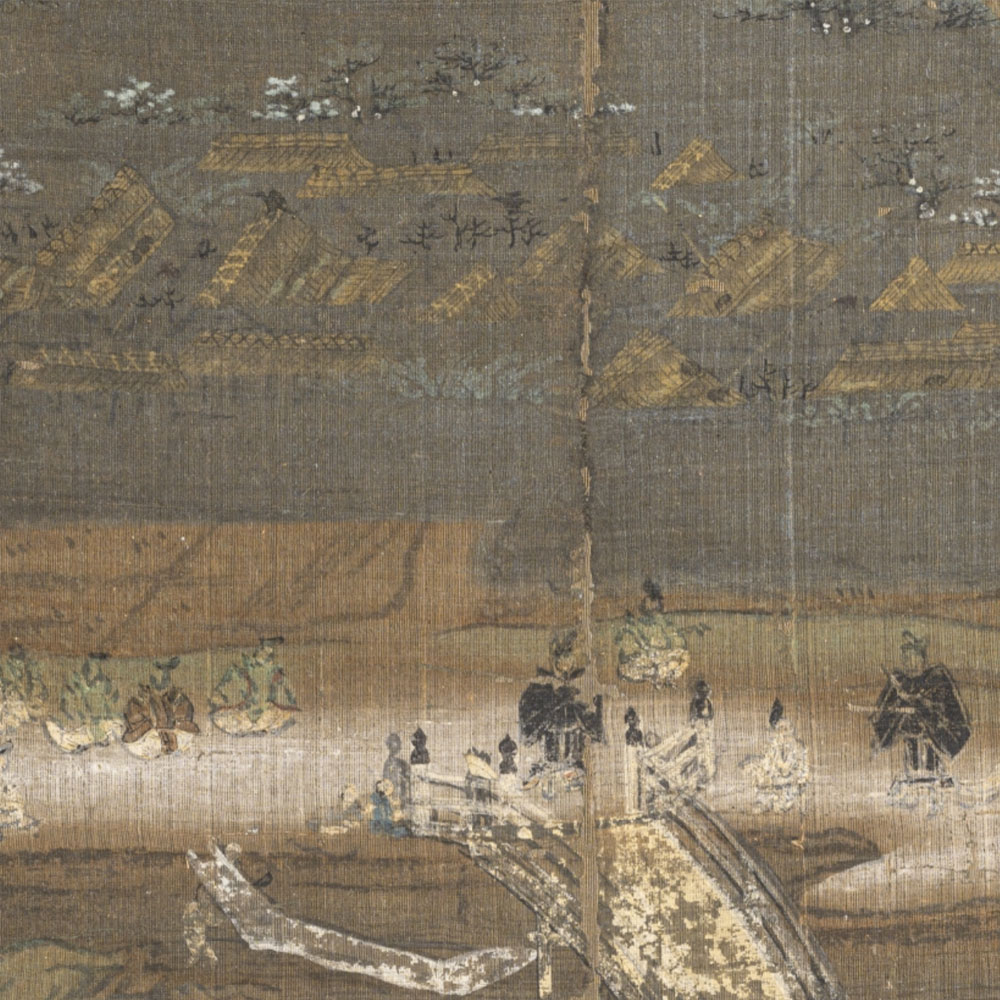
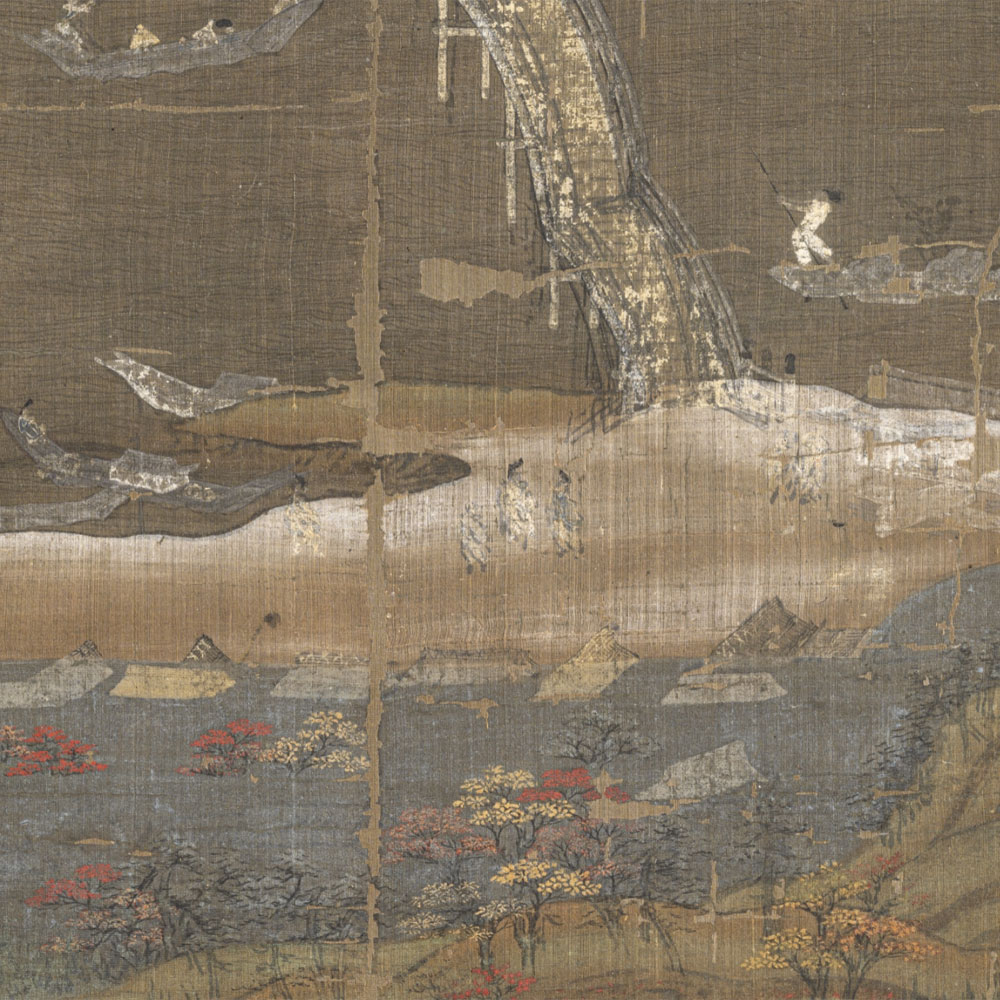
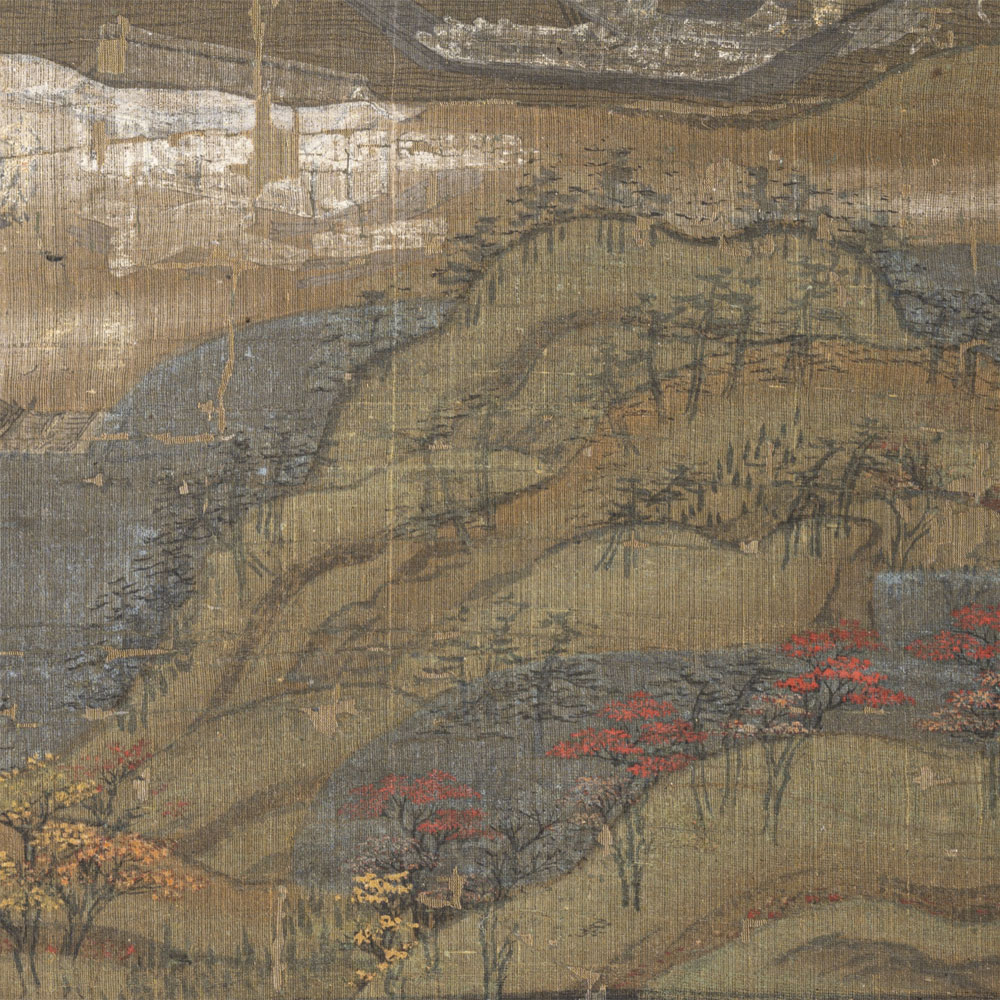
山崎橋は、平安時代、山背国山崎郷(京都府乙訓郡大山崎)と対岸の河内国(京都府八幡市)を結ぶ地、現在、淀川、桂川、木津川が合流するあたりに架けられていた。この架橋は行基の力によると伝えられている。また洪水による橋の損壊と修復の記録が史書に繰り返し見られ、水陸両路の要衝に位置していた重要な橋であったことがうかがえる。 本図は下方に縁起文をともなっており、かつては絵解きされたものであろうが、判読不明な箇所が多い。近世の書写になる縁起文一巻によると、損壊した山崎橋の修復が天安2年(858) になされた時、宝積寺の本尊十一面観音が老翁に化身して現われ、架橋を成就させたという奇談を描いたものであることがわかる。上方の山中には宝積寺の寺観、下方には対岸の男山あたりの景、中央の架橋の場面には白衣、烏帽子姿の老翁、巡行使の一行が描かれている。山崎橋は現存しないものの、景観は現在見る山崎近郊の地形に近く、実景をふまえていることをうかがわせる。縦長の画面形式による俯瞰的な景観描写のなかに人物を点在させる構図をとっているため、縁起文にたどられる劇的な霊験の様子が、景観にとけこんで穏やかな画調となり、淡々と展開されている。件の縁起文には貞永元年(1232) の宝積寺の火災のことが記されているが、その時消失した本尊十一面観音立像は、天福元年(1233) 、官人を含む京都在住の多くの結縁者と院派仏師が関与して復興されたことが現存する同像の像内納入文書類によって確かめられる。この事実は、鎌倉時代、宝積寺が観音の霊場として広く信仰をあつめていたことを物語っており、本図の制作も本尊復興とそれほど時を経ずしてなされたものと推則される。昭和63年(1988)、保存修理がなされた。
(作品解説:和泉市久保忽記念美術館 デジタルミュージアム https://www.ikm-art.jp/degitalmuseum/num/001/0010123000.html より)
Description of Artwork
Yamazaki Bridge was built in the Heian period in Yamazaki village of Yamashiro Province (present-day Ōyamazaki, Otokuni District, Kyoto Prefecture), linking the area with Kawachi Province (present-day Yawata City, Kyoto Prefecture) on the opposite bank. The bridge once stood near the point where the Yodo, Katsura, and Kizu Rivers converged. Its construction is traditionally attributed to the efforts of the monk Gyōki. Historical records repeatedly mention damage to the bridge caused by floods and subsequent repairs, suggesting that it was an important structure located at a key junction for both land and water transportation.
This painting is accompanied by an engi text at the bottom of the composition. It was likely once used for etoki (narrative explanation for painting), although many parts of the text are now illegible. According to a later early modern manuscript copy of the engi, when the damaged Yamazaki Bridge was repaired in Ten’an 2 (858), the principal image of Hōshaku-ji Temple—the Eleven-headed Kannon—transformed into an old man and appeared in order to complete the bridge’s reconstruction. The painting depicts this remarkable legend.
In the mountains at the top of the composition appears the temple complex of Hōshaku-ji, while in the lower portion is a view of the opposite bank around Mt. Otoko. In the central bridge-building scene are depicted an old man dressed in white robes and an eboshi cap, as well as a procession of officials. Although Yamazaki Bridge no longer survives, the landscape resembles the topography of the Yamazaki area as seen today, suggesting that the work was based on an actual view.
The vertically oriented format presents a bird’s-eye view of the landscape, within which figures are scattered throughout the scene. As a result, the dramatic miracle story described in the engi text is integrated into the surrounding scenery, producing a calm pictorial tone in which the narrative unfolds in a restrained and understated manner.
The engi text mentions a fire at Hōshaku-ji in Jōei 1 (1232). The standing statue of the Eleven-headed Kannon that served as the temple’s principal image was lost in this fire. However, documents placed inside the extant statue confirm that it was reconstructed in Tenpuku 1 (1233) with the involvement of many devotees living in Kyoto, including government officials, as well as Buddhist sculptors of the Inpa school. This fact indicates that during the Kamakura period Hōshaku-ji attracted widespread devotion as a sacred site dedicated to Kannon. It is therefore presumed that this painting was produced not long after the reconstruction of the principal image.
The work underwent conservation and restoration treatment in 1988 (Shōwa 63).
(参考文献)
楢崎宗重「山崎橋絵縁起」『國華』676、1948年
中村渓男「山崎架橋図」『日本の絵画』(現代教養文庫 国宝シリーズ4)、社会思想研究会出版部、1959年
『和泉市久保惣記念美術館蔵品選集』和泉市久保惣記念美術館、1982年
中野玄三「大山崎の文化財(美術)」『大山崎町史 本文編』713頁、1983年
宮島新一「山崎架橋図」作品解説、『日本美術全集 9 縁起絵と似絵』講談社、1993年
「山崎架橋図」作品解説『やまと絵―雅の系譜』展図録、東京国立博物館、1993年
鈴木美紀「「山崎架橋図」小考」『日本美術襍稿 佐々木剛三先生古稀記念論文集』明徳出版社、1998年
『和泉市久保惣記念美術館 新蔵品選集』2012年